Toonkit Insights
Toonkit's Product Philosophy: Why Are We Building an AI-Powered Animation Production Tool?
 Team ToonkitViews —


Hi creators,
This is Team Toonkit.
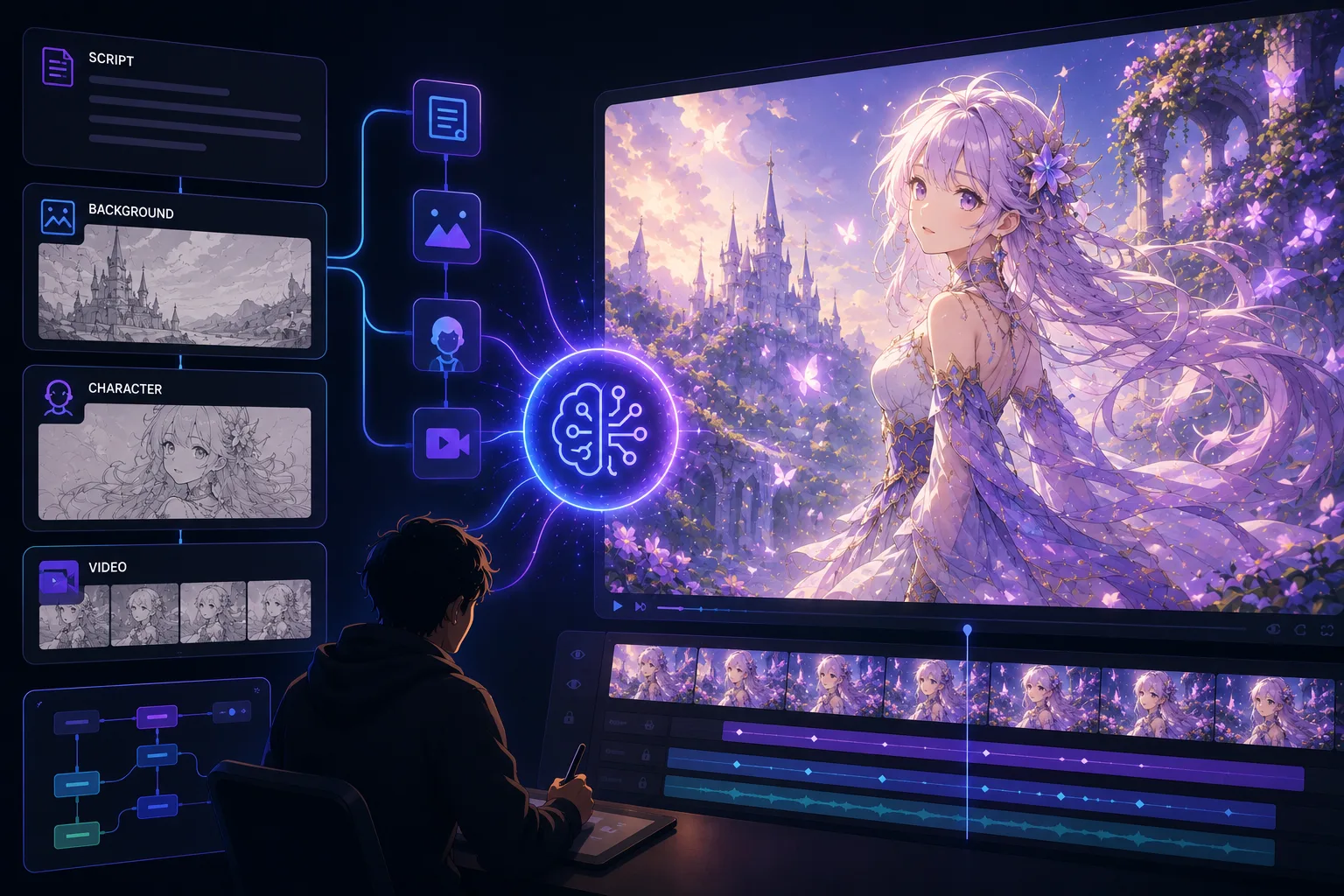
As we shared in our previous post, we're building Toonkit, an AI-powered animation creation tool, with a vision of an era where anyone can become an animation creator.
From September 2025 to now, June 2026, there's one question we've heard countless times while building Toonkit. It has come up persistently, regardless of the situation or the person — from users of our product, from our own teammates, from our partners.
Why anime?
Many of our teammates love watching anime. Because we're building an animation creation tool, even our hiring criteria favor people with a deep interest in anime — we've deliberately built a team of people who love the culture.
But our choice for animation isn't simply about the team's hobbies and interests.
Generative AI cannot replace creators.
Just like the audiences who encounter AI-generated content, this is the sentence we hold most dear, and the value we pursue. Content that is polished and immersive is determined not by the superiority of the AI technology, but by the creator who wields it — their experience, their narrative, their direction, their ability to think on a different plane.
And 2D illustration and animation is one of the fields where the fear of creators being replaced runs deepest.
Without careful planning from scenario to direction, work that merely learns the art styles of famous artists is being churned out at speed — plausible-looking images and short, incoherent clips, all produced through AI without any of the pain of true creation. And this trend does nothing but plant endless resentment toward AI in the hearts of the people who love this culture.
And yet, the animation production industry is a field that needs the adoption of AI more desperately than any other.
Two years ago, we started with a single question: how can we make sure that more of the high-quality video content we love gets made? That question led us to meet with countless VFX studios, production companies, and film and animation directors, and to experience the professional production process and the real structure of the industry firsthand. Through that journey, we grew even more certain in our conviction: we needed to build technology to make animation production — not live-action — more efficient.
Words like "indie film," "indie game," and "indie band" feel familiar to us, but "indie animation" is a somewhat foreign term. Why is that?
Because animation production requires an enormous amount of manual labor — in other words, a large number of people. That makes it nearly impossible for an individual or a small team to create a work with enough substance to tell a full story.
The animation series we love to watch typically run about 25 minutes per episode — roughly 20 minutes excluding the opening and ending — with around 12 episodes per season. And they're usually broadcast at a frame rate of about 24fps (24 frames per second).
By simple math, completing a single season means people have to draw 345,600 frames, one by one.
To raise the quality of the finished work efficiently, the labor is divided. The "key frames" (genga) that are handled by relatively experienced, seasoned artists; the "in-between" (douga) work that fills in the movement between key frames is done by less experienced artists. And the work of carefully checking whether the key frames are well executed — the "key animation director" role — is handled by artists with both deep experience and outstanding directorial skill.
But the animation industry is seeing a steady decline in the influx of new talent. People enter the industry dreaming of directing a great masterpiece of their own and with a love for animation, only to find that what awaits them is a workload that inevitably leads to an irregular life, low wages, and a grueling path that can take years — often more than a decade — before they can realize their dream of directing.
The decline in new talent leads to a gradual erosion of production capacity, which in turn lengthens the cycle for completing good animation works. And so, even as OTT platforms grow, the animation content we want to watch is not increasing — it's actually shrinking.
Team Toonkit dreams of a future free from the constraint that masterpieces can only be made through the blood of many artists and large-scale animation studios — a future where individuals and small teams with compelling stories, outstanding directorial vision, and a burning desire to create can freely make masterpiece animation.
We believe every one of you is a creator who will build this wonderful future together with us. And we promise to always listen closely to your voices and do our utmost to deliver the technology you need, as fast as we possibly can.
Was this article helpful?
Your feedback helps us create our next article.
More to read
View all ›
ToonKit's Product Philosophy (2): Empowering Creators to Reach Their Full Potential
Scoping The Future of the Anime Production, For Creators, By Creators, With Creators
Team Toonkit32 views
The Problem Toonkit Is Solving: An Era Where Anyone Can Become an Animation Creator
A New Animation Creation Ecosystem Where Ideas Become Works, and Works Become IP
Team Toonkit135 views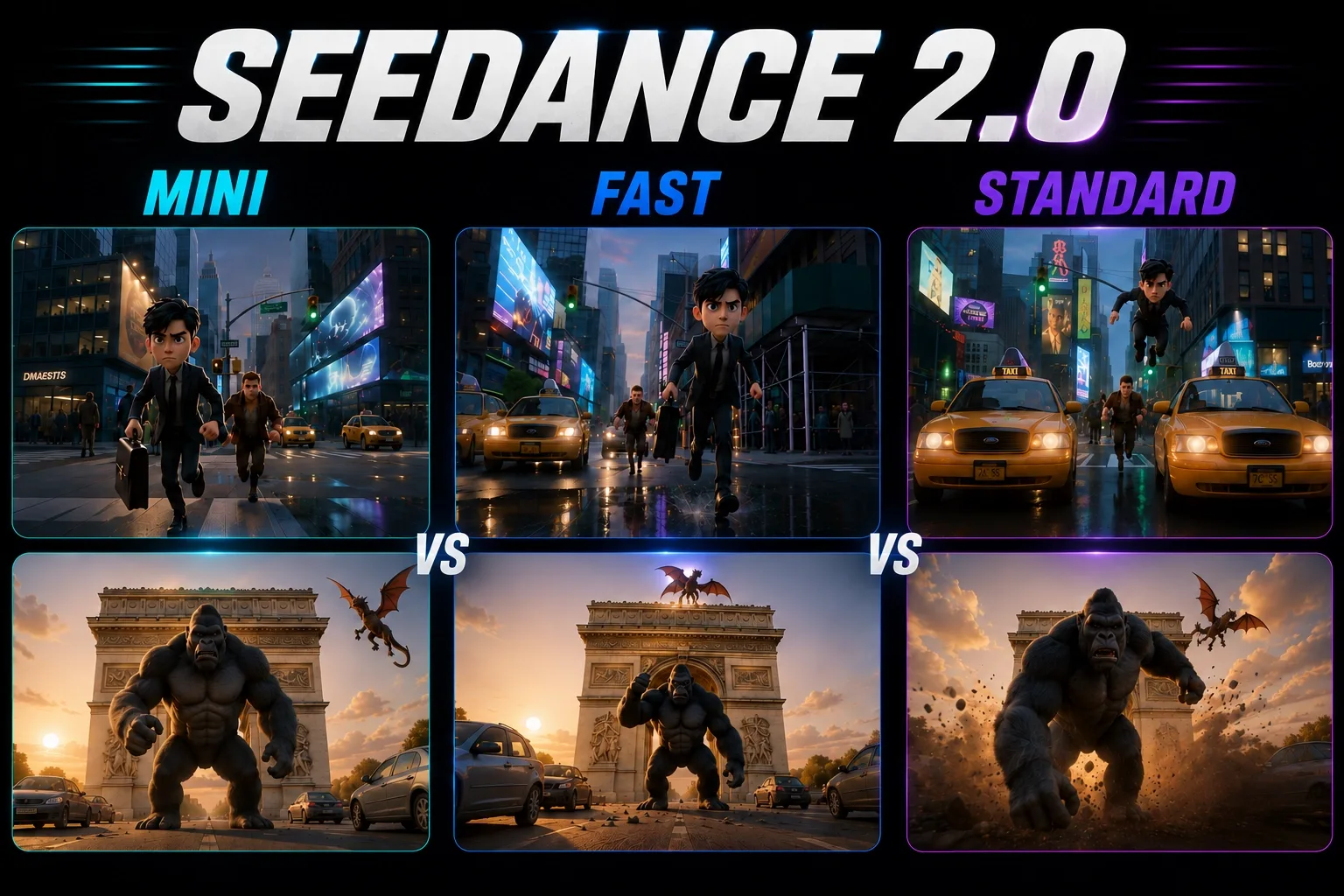
Seedance 2.0 Mini vs Fast vs Standard: What's the Difference? We Compared Them With the Exact Same Prompt
A New York chase scene and a monster showdown at the Arc de Triomphe — we ran two identical prompts through all three models to compare their action staging side by side, plus the prompt formula that gets the most out of Seedance 2.0.
Team Toonkit72 views